
Mirador Ferrier Hike, a Bird’s Eye View of Torres del Paine, Chile
The hike to Mirador Ferrier, while one of the main trails in the park, is often overlooked in favor of more popular ones. Still, it offers a fantastic bird’s eye view of the park, and a peek into the more remote areas to the West.
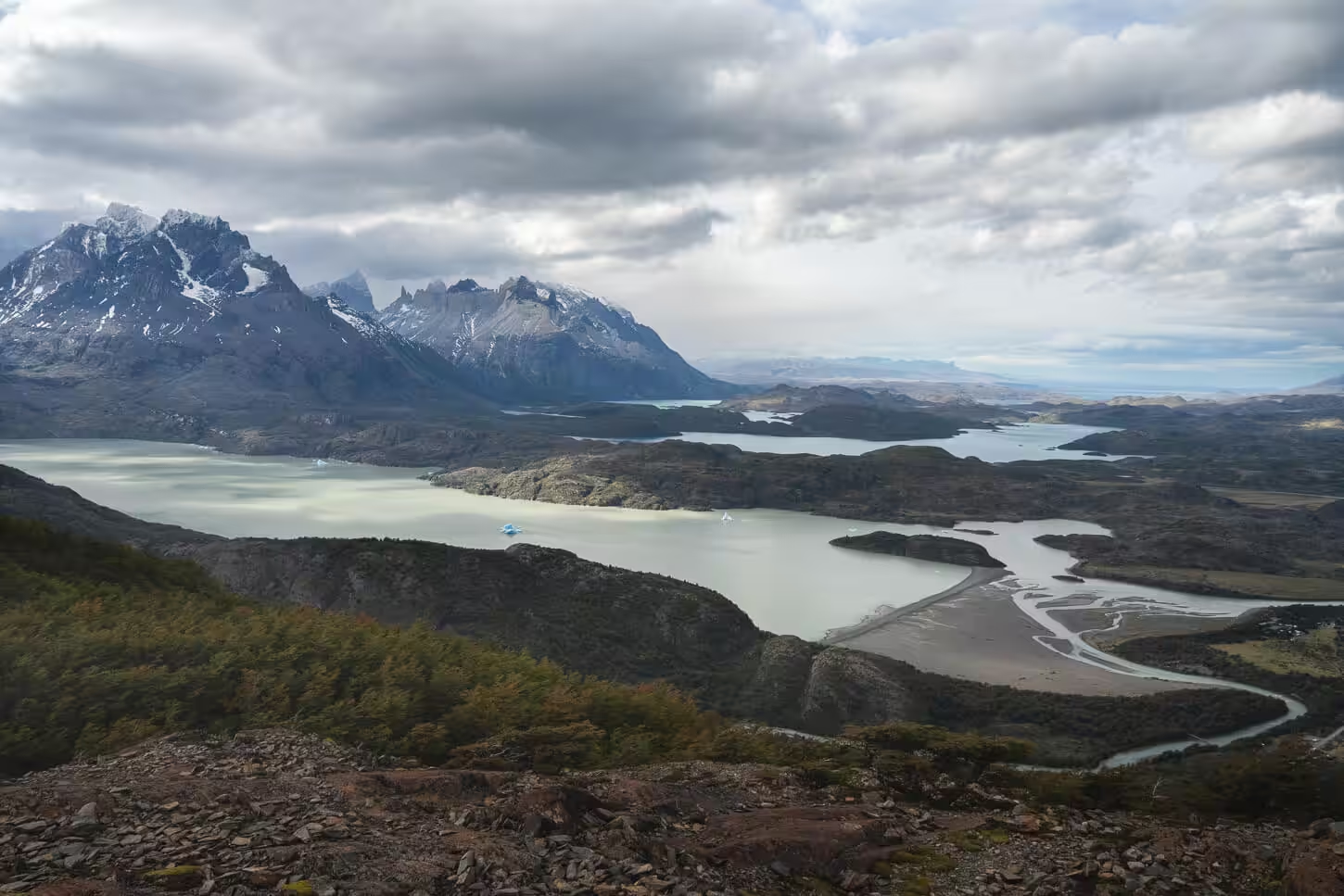
Lago Grey from the Mirador Ferrier Trail.
From the Ferrier Lookout, the views of the park are stunning. You really have a good bird’s-eye view of the park. Los Cuernos, the Paine Grande massif, Glacier Gray, and countless other mountains. So you could say Mirador Ferrier is one of the best 360-degree panoramic viewpoints in the Torres del Paine Park.
| Mirador Ferrier Hike: Quick Overview |
| • Distance: 5.77 km / 3.58 mi (Out & Back) | Time: 2h 30m–3h 00m | Difficulty: Moderate | Trail: Guardería Pingo to Mirador Ferrier, Fully marked |
| • Start & Access: Guardería Pingo / Lago Grey Area (CONAF hut registration required; 2:00 PM trail cutoff time) |
| • Best Season & Light: October to April / Early afternoon before the cutoff time |
At less than 6km, the Mirador Ferrier isn’t a difficult hike, but it does have a rather demanding elevation gain for its length, at almost 700m (or about 2,200 ft.) in total. And the summit is completely exposed to the elements, so when the mighty Patagonian winds decide to blow, it can blow hard up there.
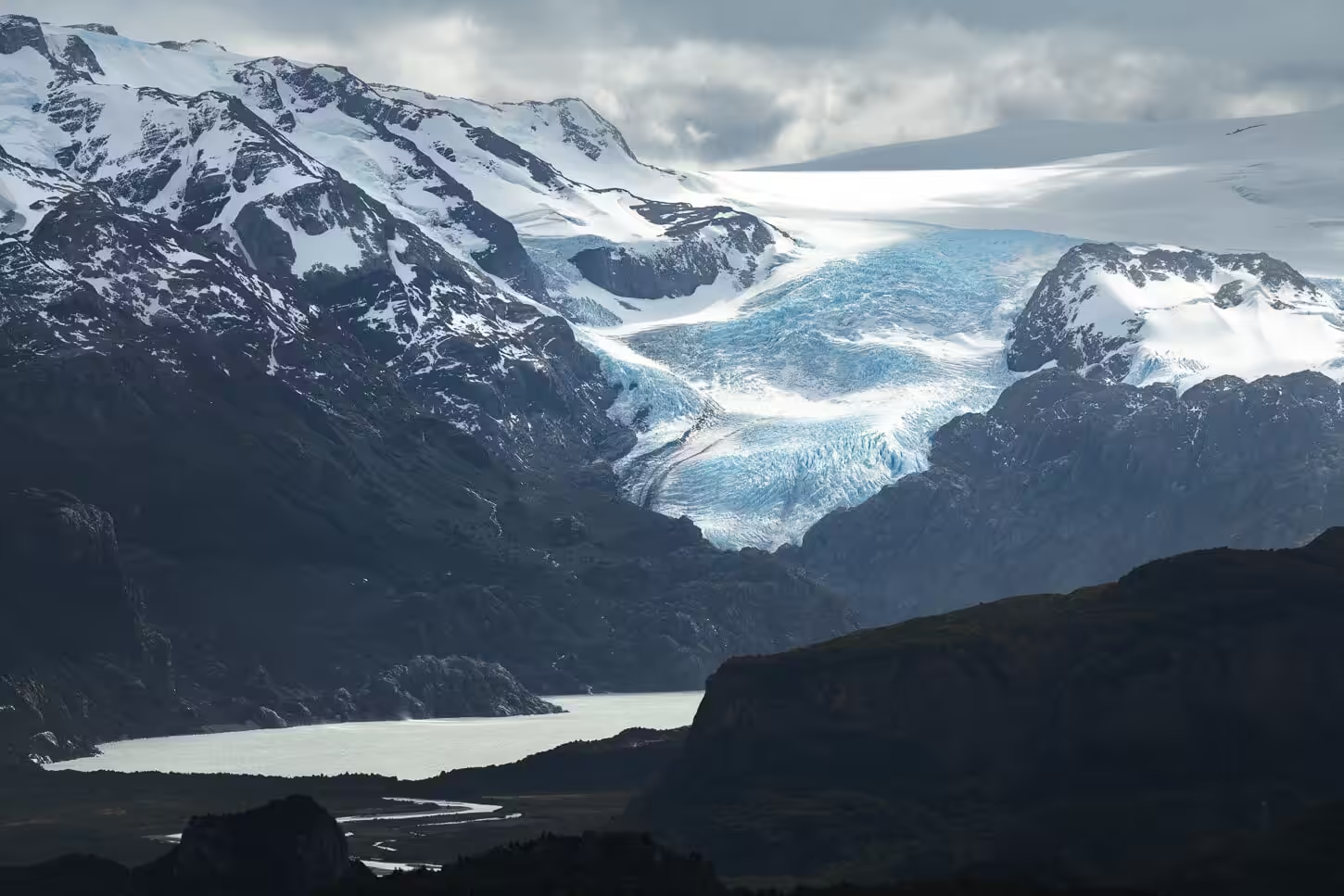
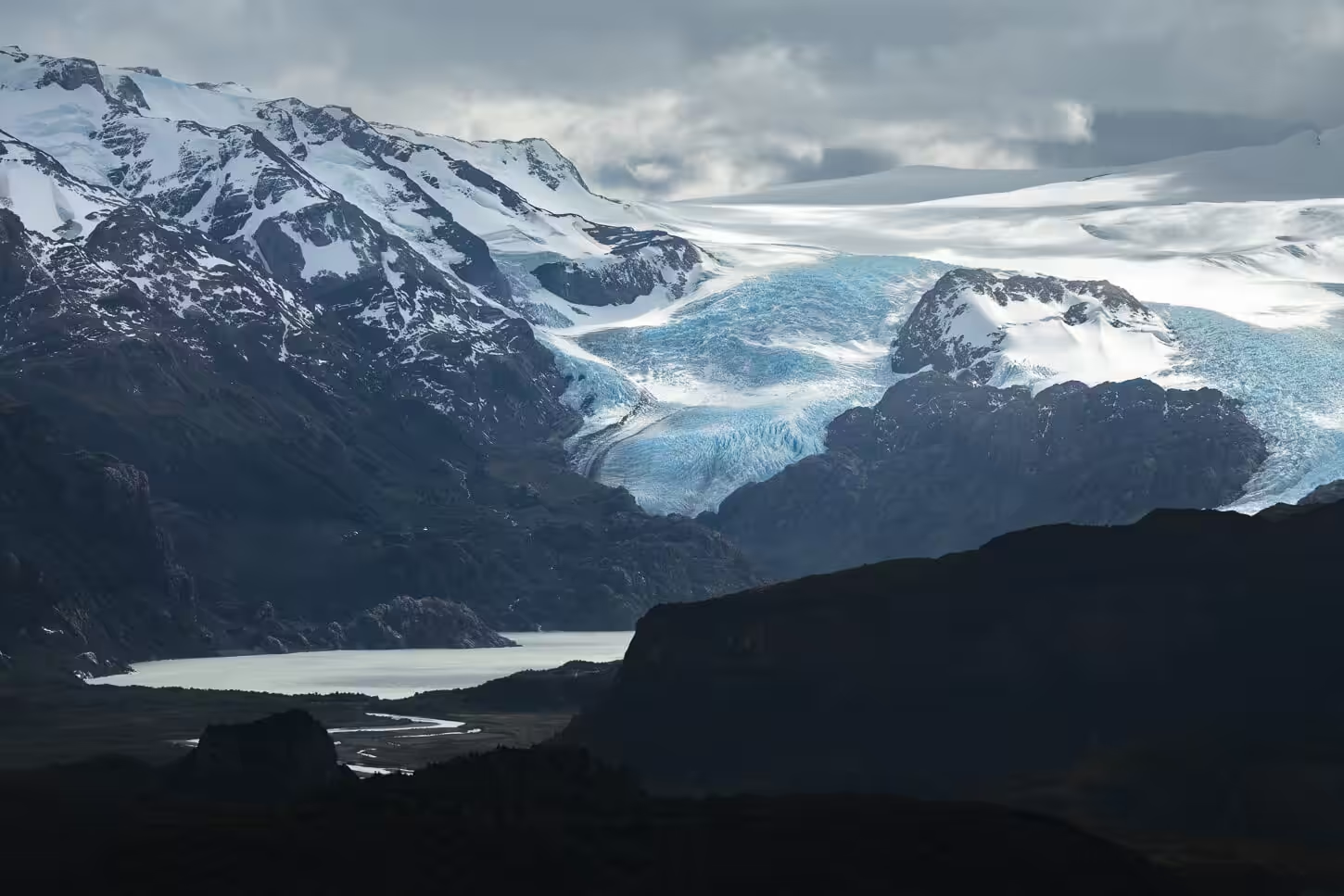
View of the Pingo lang and Glacier Pingo from the Mirador Ferrier.
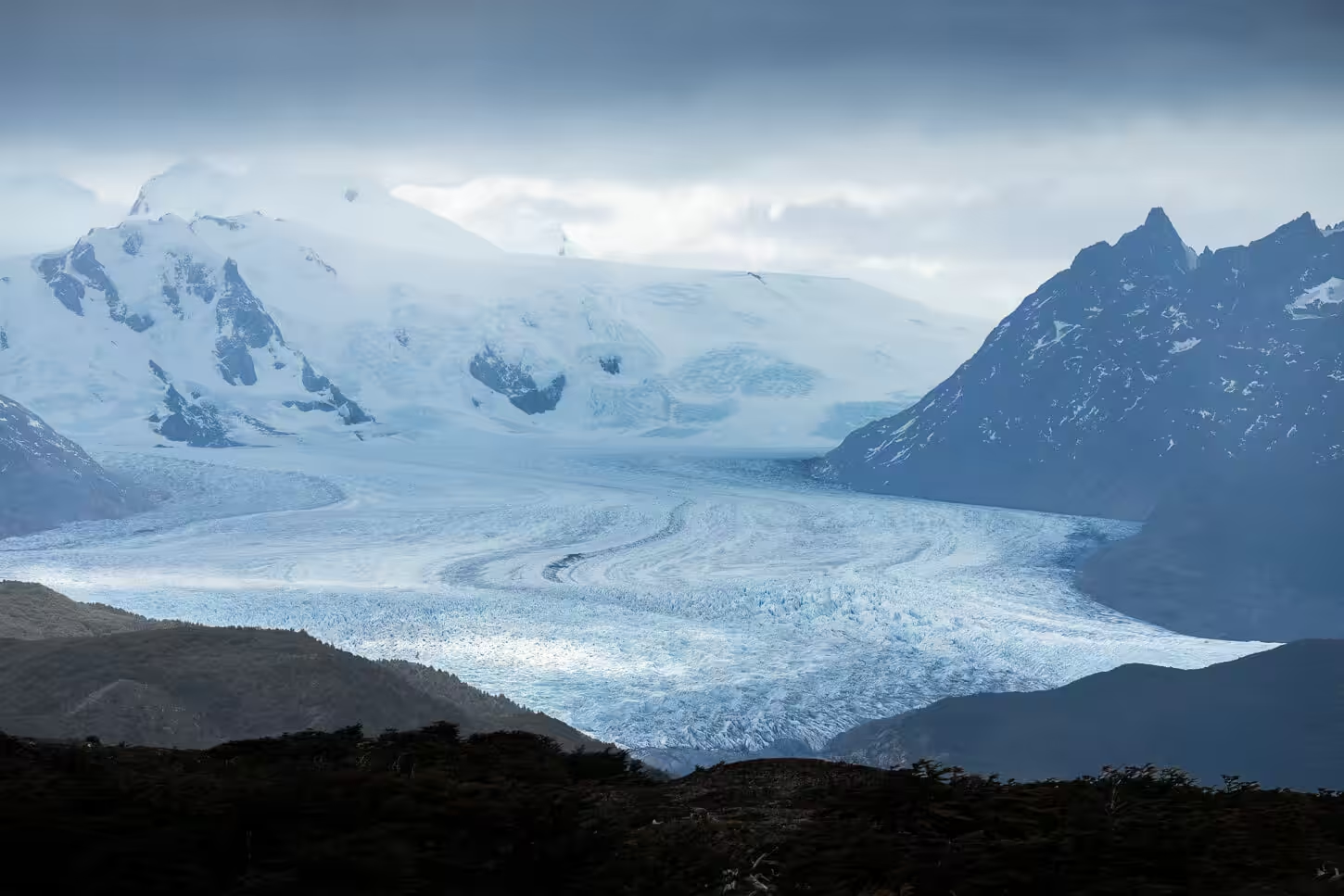
Glacier Grey, viewed from Mirador Ferrier. Photo taken at 400m.
This was also my very first hike in the Torres del Paine Park, and one I will vividly remember for quite a long time. I saw a Huemul, and found myself face-to-face with a Puma. If you are also into wildlife, I’ve added the full story of this unexpected and rather unique encounter below – along with insights on wildlife in the area.
Table of Contents
Overview of the Mirador Ferrier Hike, Map & GPX File
The Mirador Ferrier Trail is one of the few within the Torres del Paine park that is not part of a trekking Circuit, like the O or W Treks. So it needs to be planned for separately.
Still, like any other trail in Torres del Paine National Park, you need to purchase an entrance ticket, which you can easily do online at pasesparques.cl. Starting May 2026, there also is a new pass/ticketing system.
The Park is generally open from 8:30 AM to 6 pm, but you can drive in and out at any time. Just purchase the entrance tickets online, because if you enter before opening time, you’ll need to wait for the Rangers office to open to purchase your ticket.
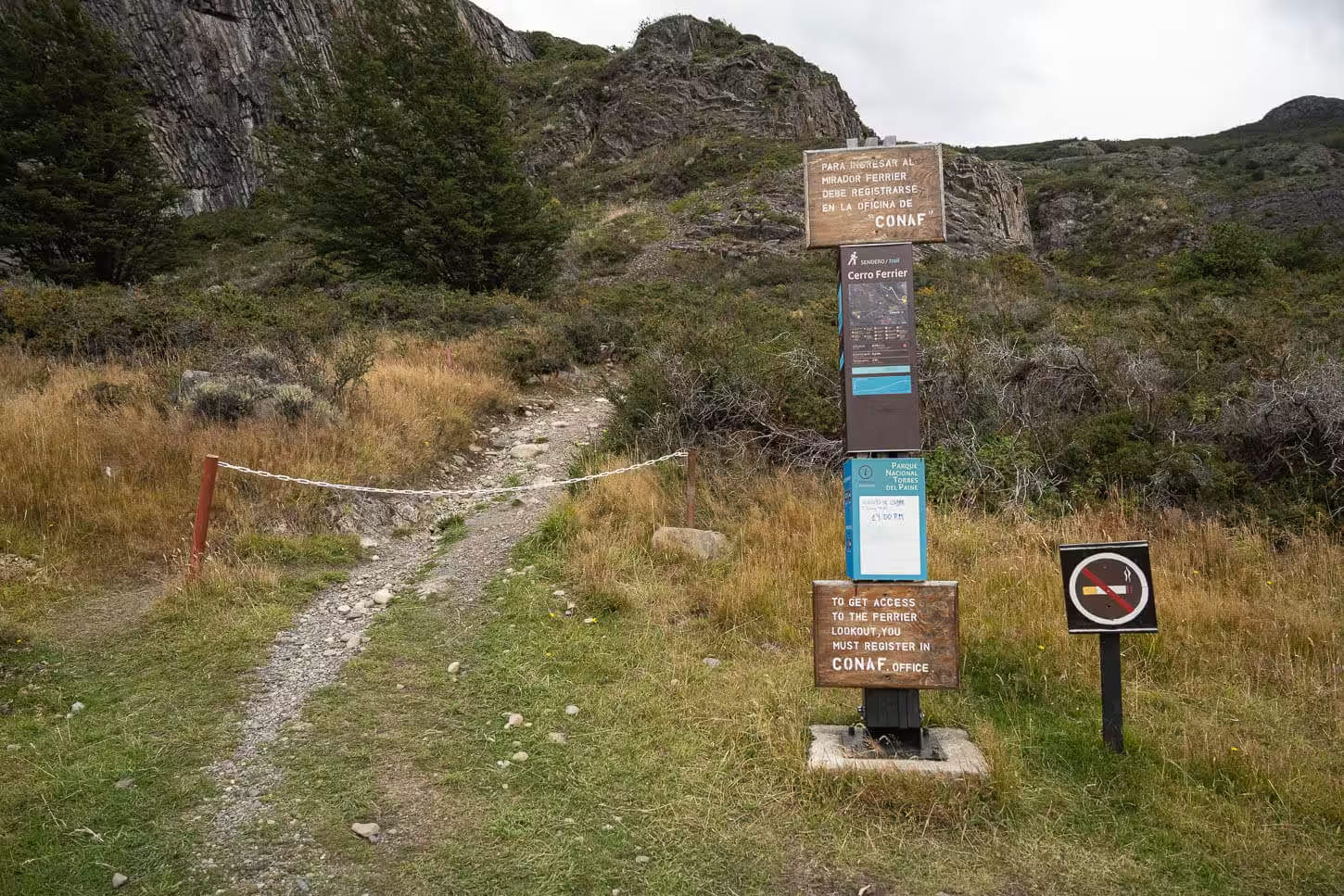
Mirador Ferrier’s Trailhead – Registration at the conaf Hut is required
Also, like most trails, the Mirador Ferrier has a closing time. The trail closes at 2 pm, so you can start the hike up to that time. You also need to register at the CONAF hut before heading up, and check out when coming back. This is purely for safety reasons. The trail is also fully signposted and easy to follow.
Lastly, it’s a relatively short hike, so if you are up to it, you can combine this hike with other relatively short ones like Mirador Cuernos or Mirador Condor – or the nearby Mirador de los Hielos on the shores of the Nearby Lago Grey, if you are up to it.
Here is the full overview of the hike to the Mirador Ferrier:
[/fusion_table]
Here is the map of the hike.
[/fusion_table]
How to get to the Mirador Ferrier trailhead and Parking
Like pretty much all the roads within the Torres del Paine National Park, the road to the Mirador Ferrier Trailhead is a rough gravel road riddled with potholes. You can do it in any 2WD car, but it pays to drive slowly and carefully if you wish to avoid getting a flat. It’s not really that uncommon within the park.
- Driving Directions: If you are staying within the park, you’ll have to drive to the end of road Y-150 to the East, toward Lago Grey. If you are coming from Puerto Natales, you can either take Road 9 and Road Y-150 from the East, entering the Park via the Laguna Sarmiento Station. Alternatively, you can turn onto Road Y-290 shortly after passing the Puerto Natales Airport, enter the park through the Serrano Ranger Station, and join Road Y-150 from there. Both roads take about the same time, though Road Y-290 is rougher and slower going. Most importantly, both are equally scenic.
- Parking: there’s a large parking area at the end of road Y-150, next to the Rio Pingo Restaurant.
- Public Transport: If you are located within the park, there are some bus transfers or shuttles you can take to go from one of the Park entrances to Lago/Hotel Grey. From Puerto Natales There aren’t any real direct services from Puerto Natales directly to the Trailhead. However, there is a bus between Puerto Natales and Hotel Lago Grey, which is about 15 minutes on foot. An overview of the transfer options here on the official Torres del Paine Website.
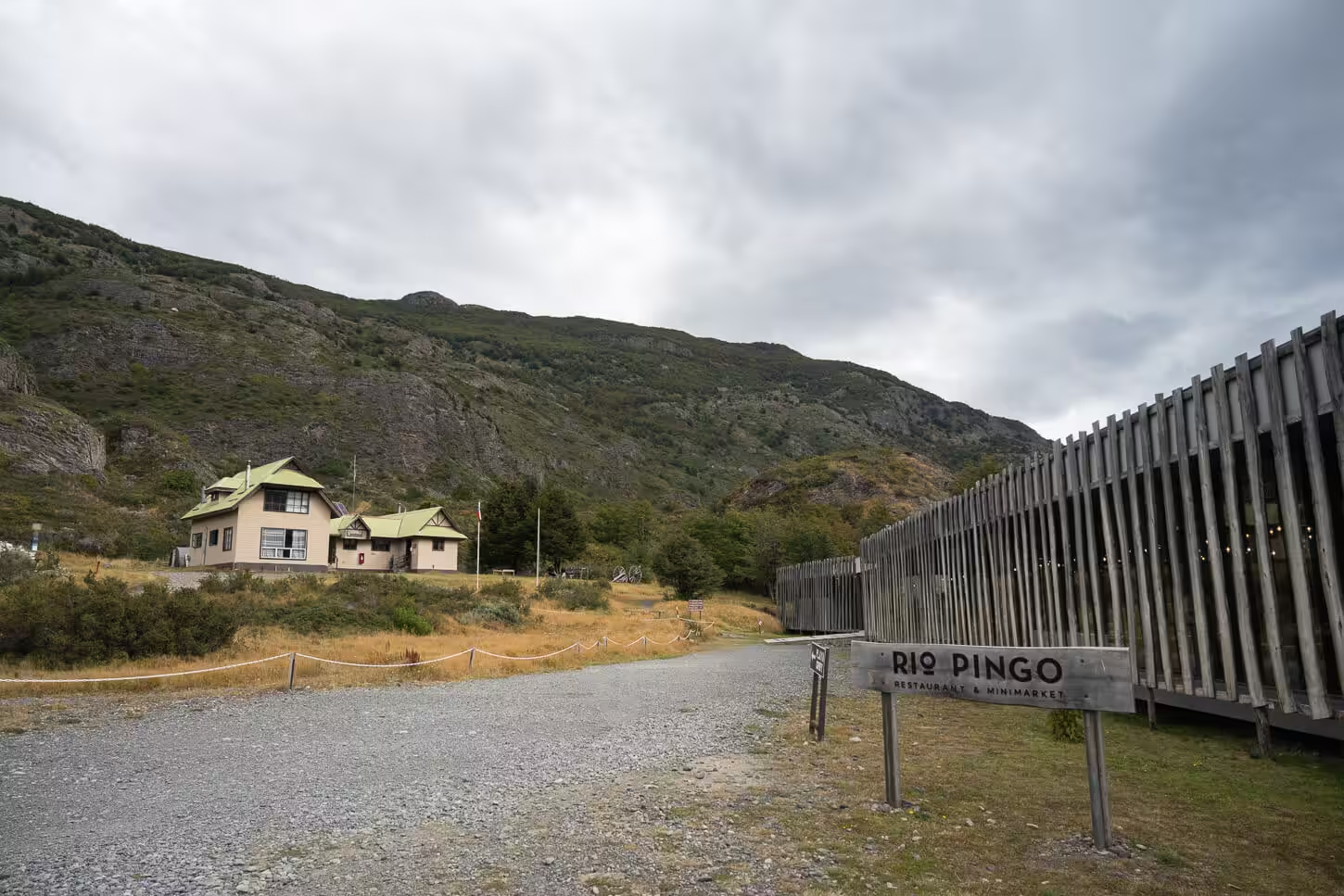
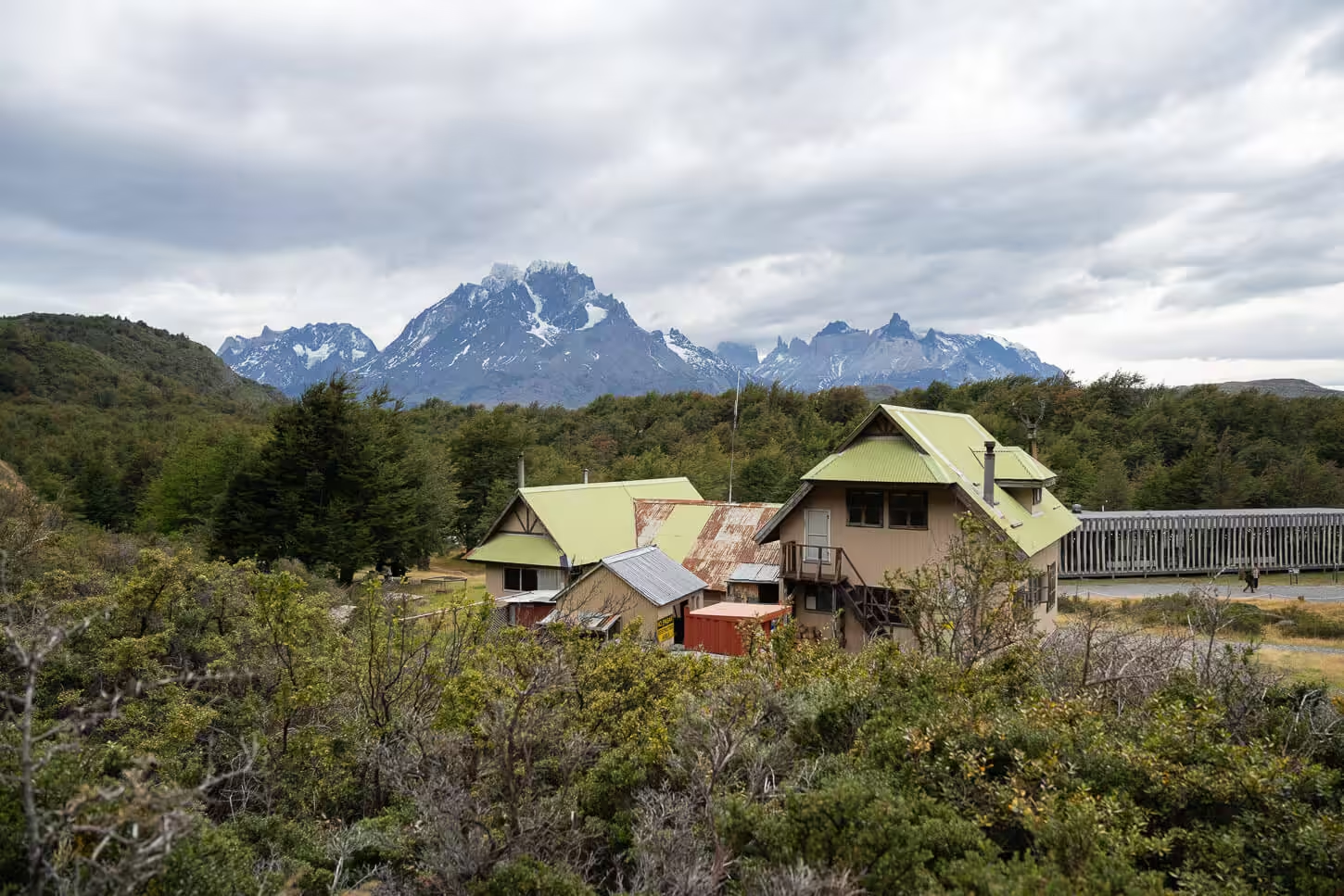
The CONAF hut by the trailhead, on the Left. You need to stop by the Hut and register before heading out – and check out once you’re back.
The Mirador Ferrier Hiking Trail
For the first kilometer or so after leaving the Ranger’s hut, the trail is mostly flat. As soon as you start to gain a little elevation, however, the view gradually opens up, providing a small anticipation of what’s to come from higher up.
Leaving the Ranger’s Hut, the trail is initially flat and leads through thick vegetation.
As you gain elevation, the views gradually open up to the surrounding area.
The trail then becomes gradually and increasingly steep. A couple of sections are rather narrow; here and there, you will also find some more thick vegetation.
However, the trail is never so steep that you need to scramble, and there are no exposed sections. There are also plenty of trail marks that signal both the distance to the mirador (and back to camp) as well as boards that show you how much elevation gain you have done already, and how much is left.
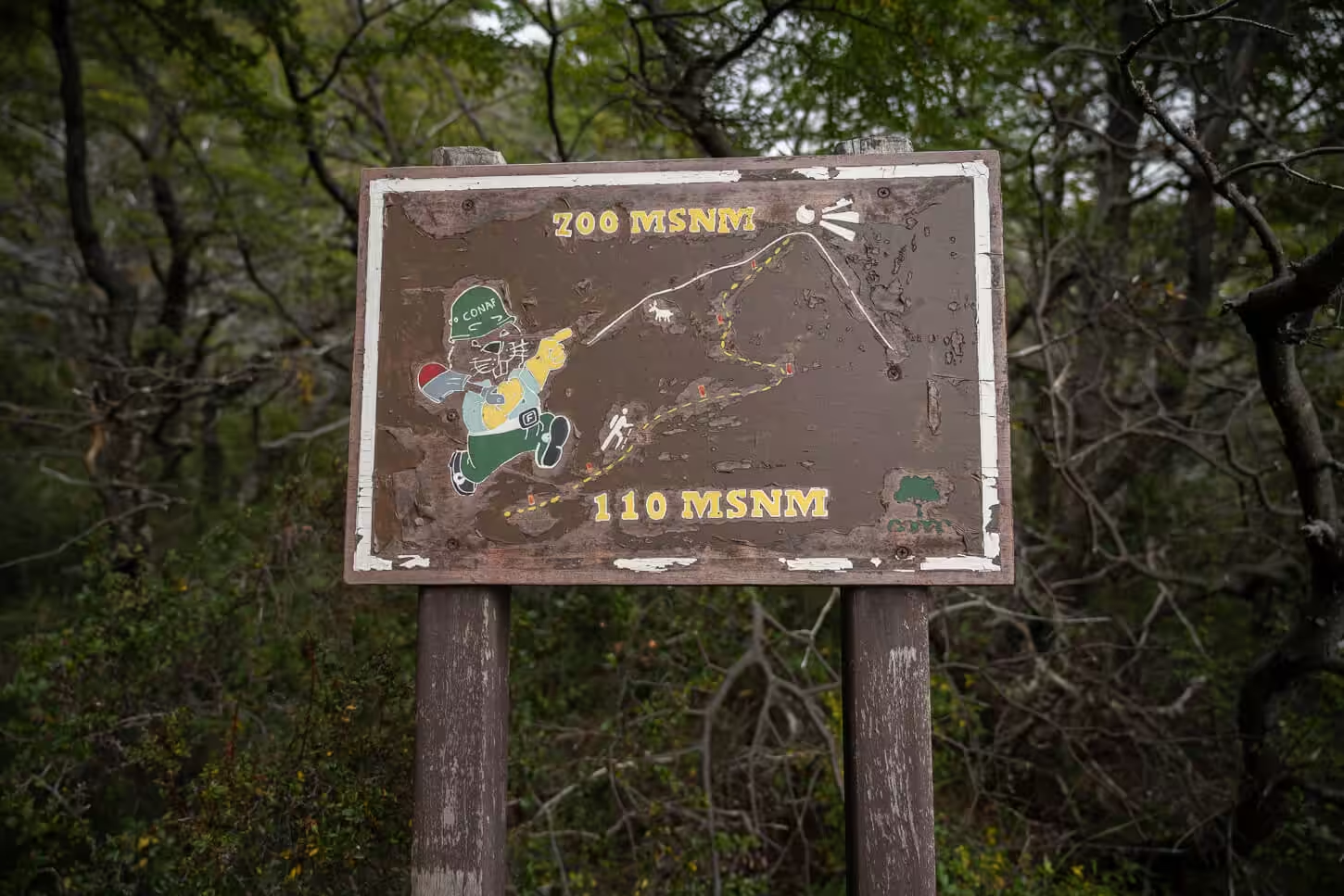
The trail is well signposted, and there are also boards showing the total and remaining elevation gain.
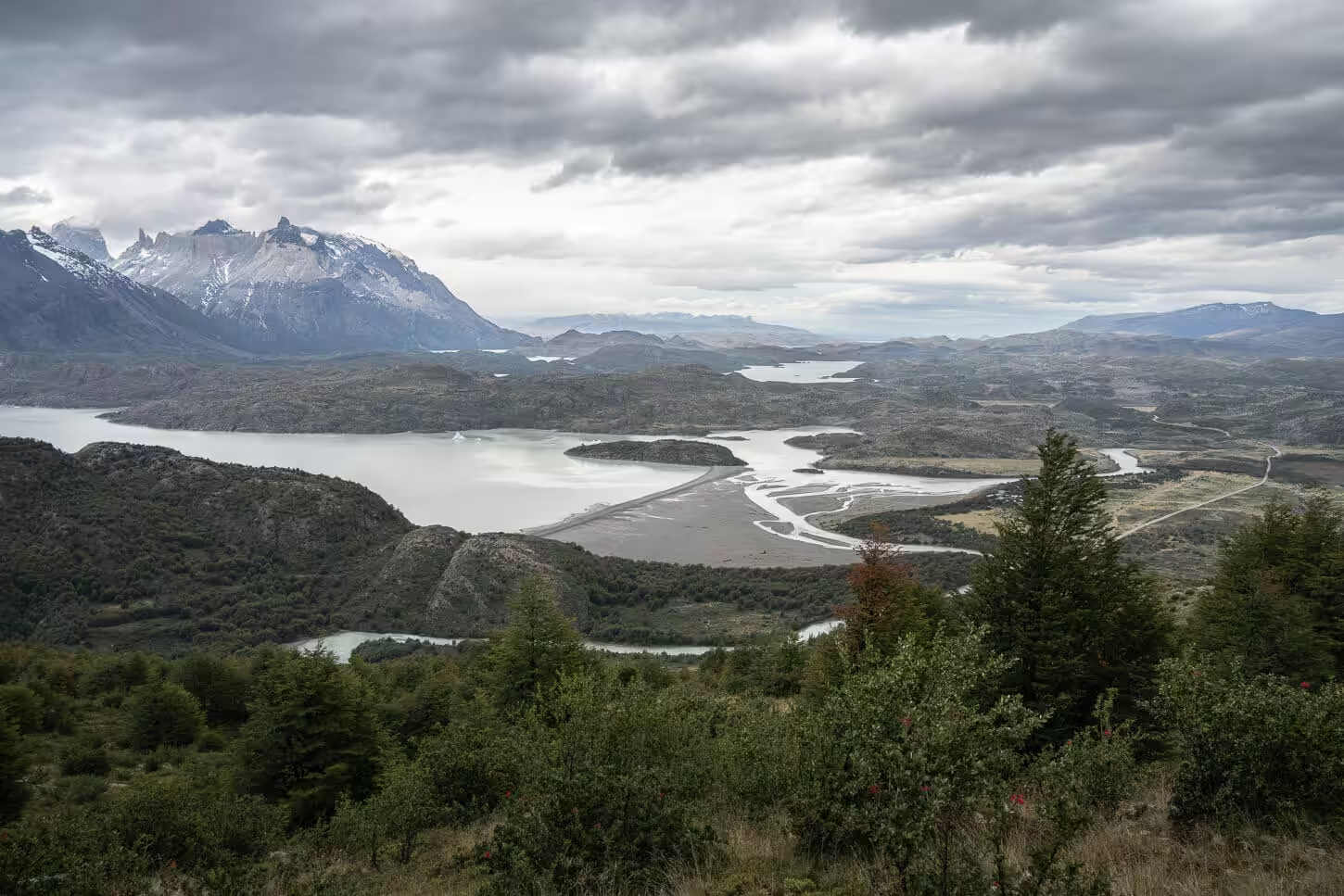
Halfway up the trail, there is another lookout that provides good panoramic views.
About halfway up the mountain, there is a mid-way lookout that already provides pretty good views of Lago Grey. The trail continues up the mountain, mostly into relatively thick vegetation, before entering the last stretch through the forest. This is also where I came across a Huemul, grazing in the forest.
It was quite a lucky sighting, as only about 45 Huemul are roaming around in Torres del Paine. It was deep into the woods, grazing on steep terrain.
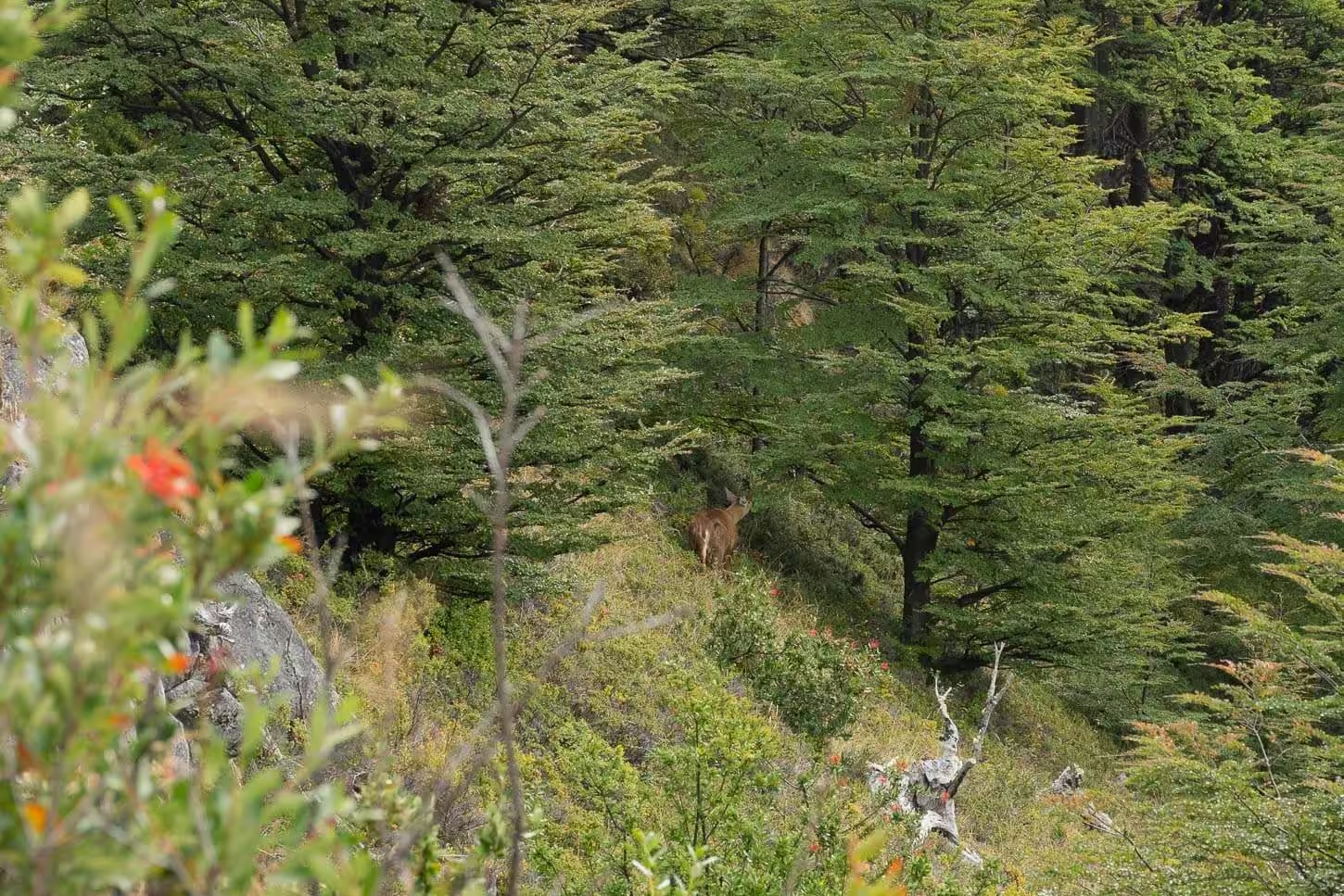
Huemul grazing around the Mirador Ferrier Hiking Trail.
Here, the trail enters the forest again. This last bit in the forest is also steep at times, muddy in places, and with thick branches and roots all over. So it can be easy to slip if you are not careful. Overall, it is rather slow going, but it is only a short stretch.
As you gradually exit the vegetation, you will reach the end of the trail, where you have to take a turn to the right to access the Mirador.
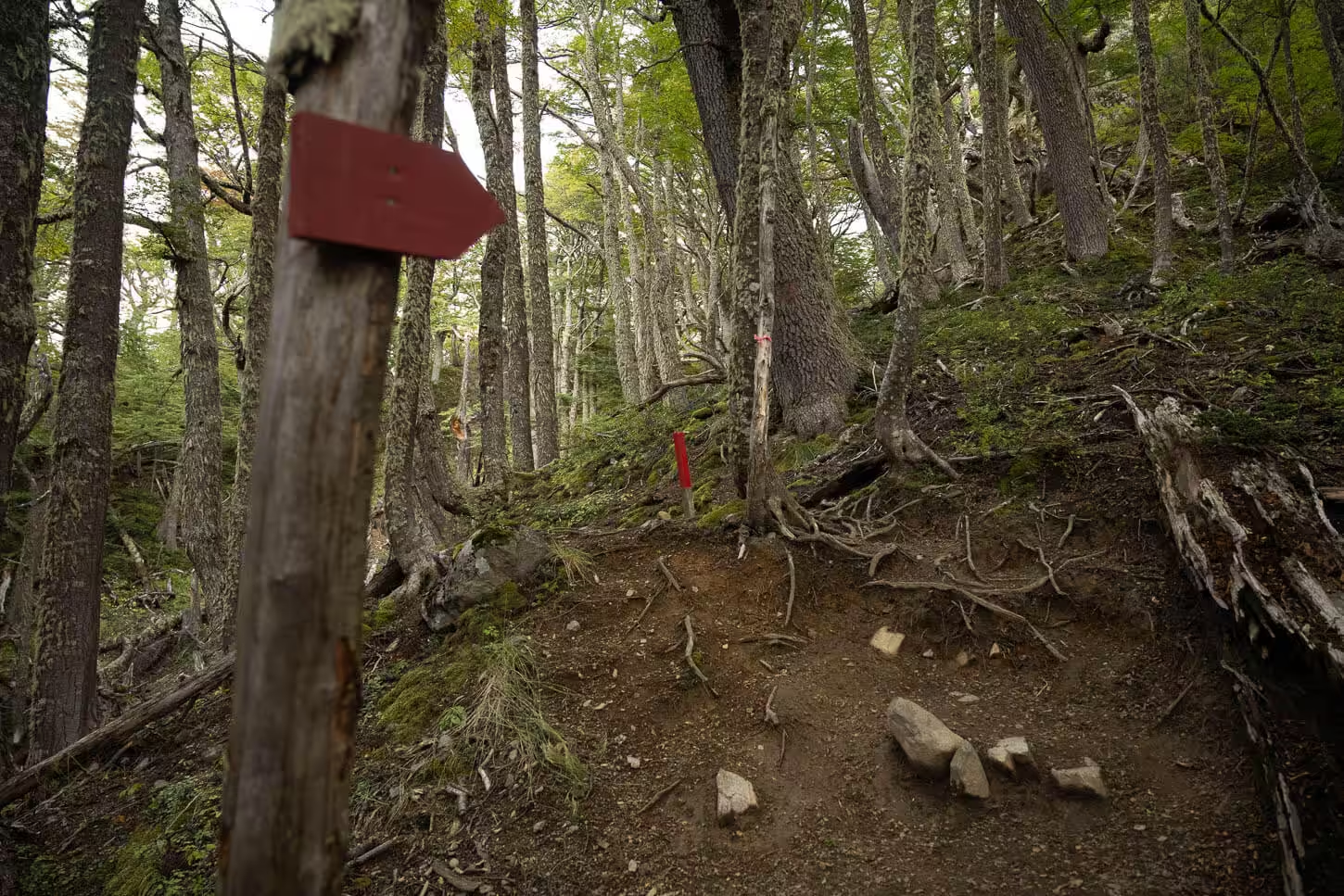
The last bit before the Mirador leads through the forest.
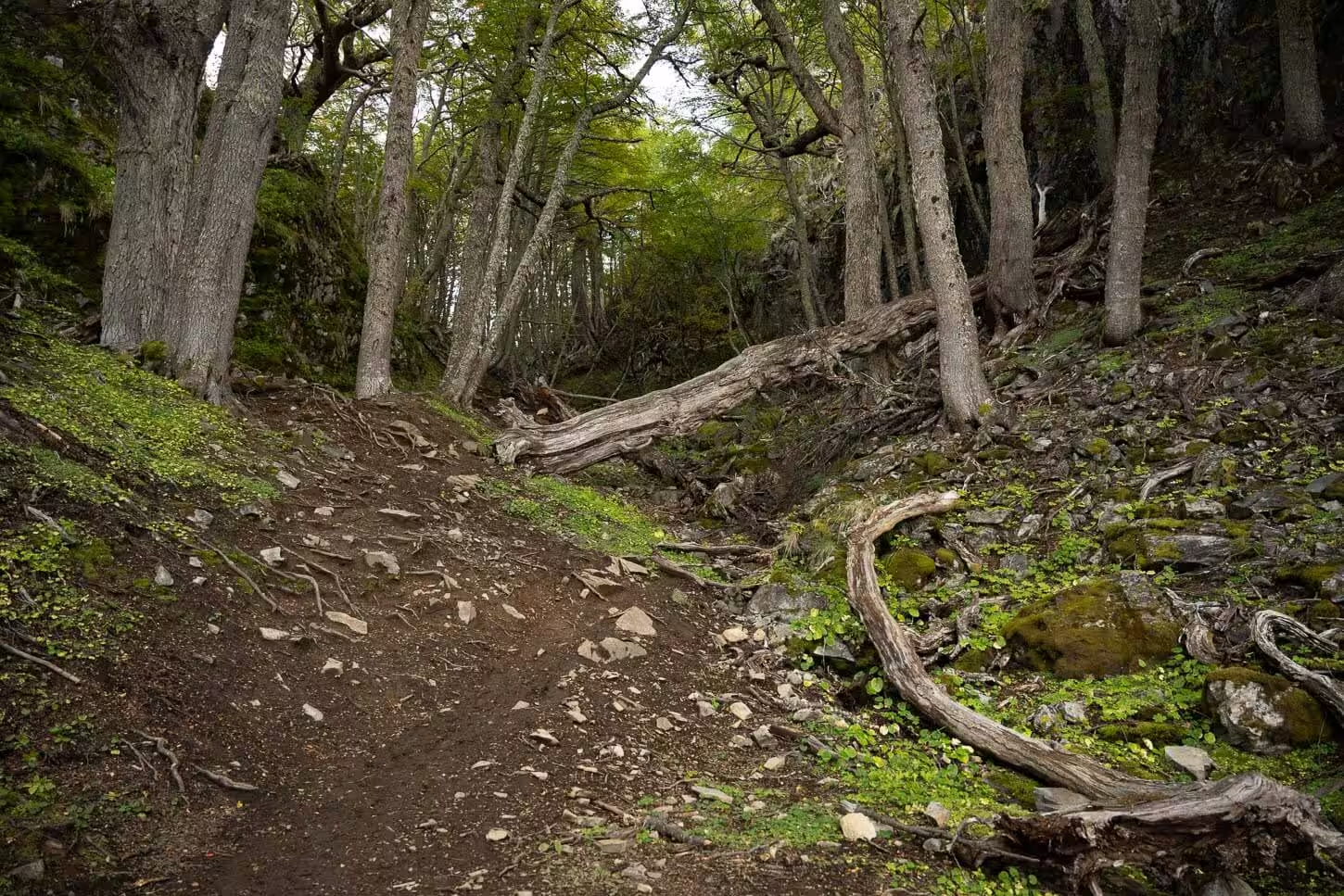
Some sections are steep, with exposed roots and can be muddy in places.
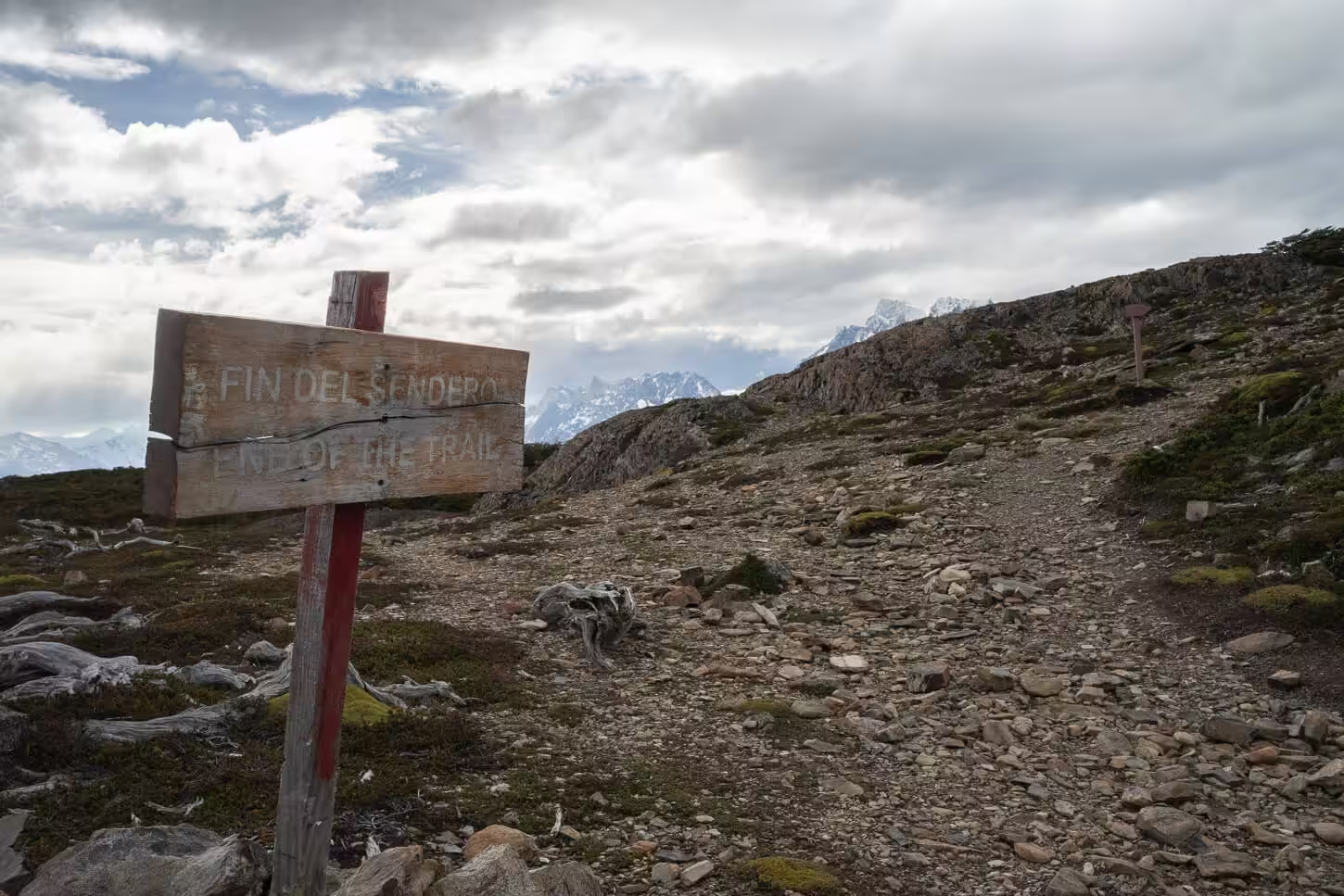
The trail ends above the forest and turns around to the top of the Mirador, revealing the 360-degree panoramic views.
The Mirador area is quite a large, relatively flat spot. So there is plenty to move around or just sit and enjoy the views.
On the views – you have a very good view of Lago Grey, and fantastic views of the Grey Glacier even from that distance. And of course, the Paine Grande Massif as well as Los Cuernos. Plus, a good view of the even more remote Pingo Lake and Pingo Glacier to the west of the Grey Glacier. Plus all the lakes at the foot of the massif.
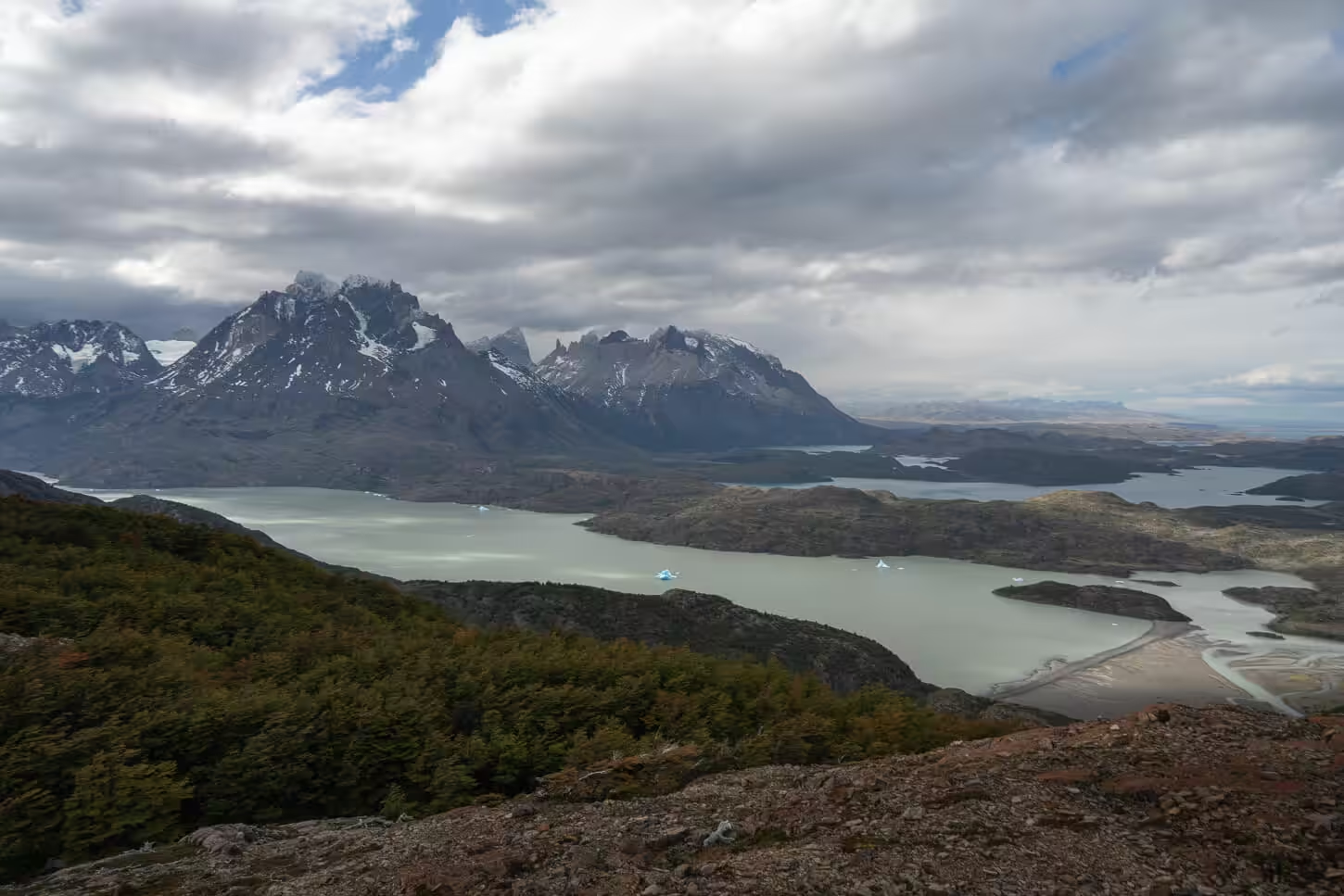
Lago Grey is the most prominent feature visible from Mirador Ferrier.
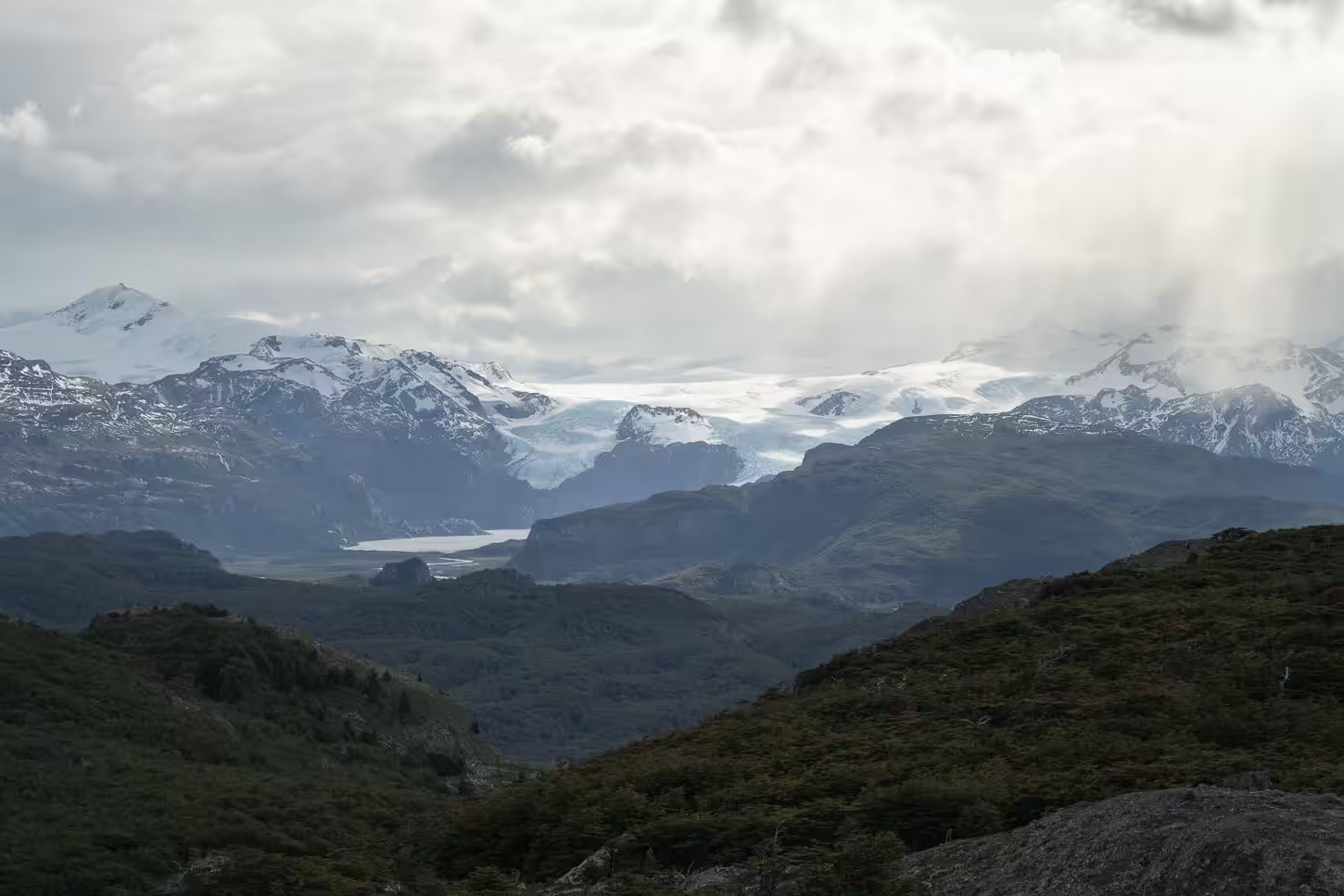
To the north, views open up to glaciers, lakes, and forests.
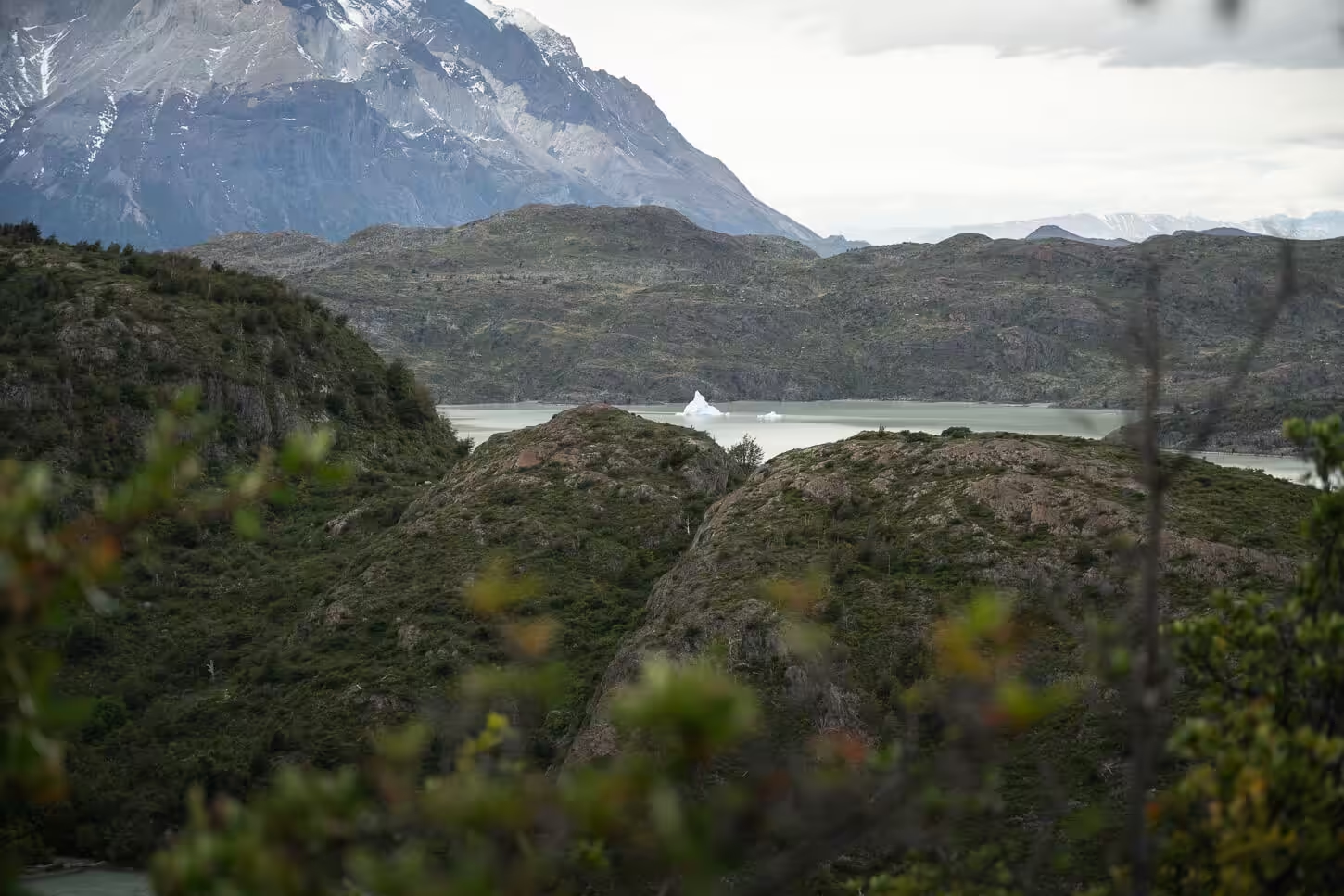
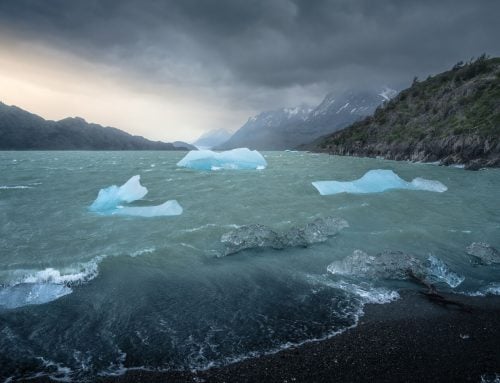
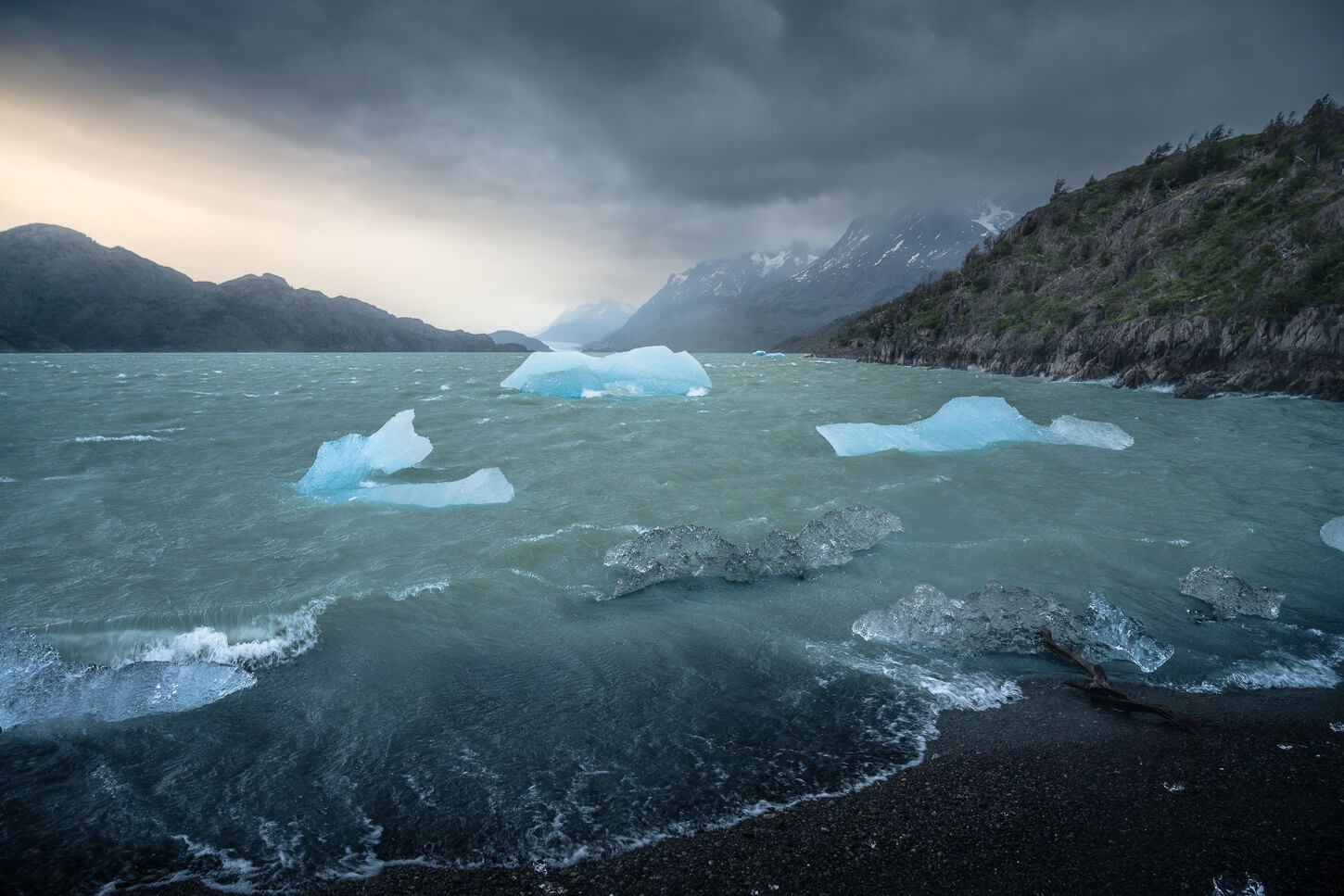
Iceberg floating on Lago Grey.
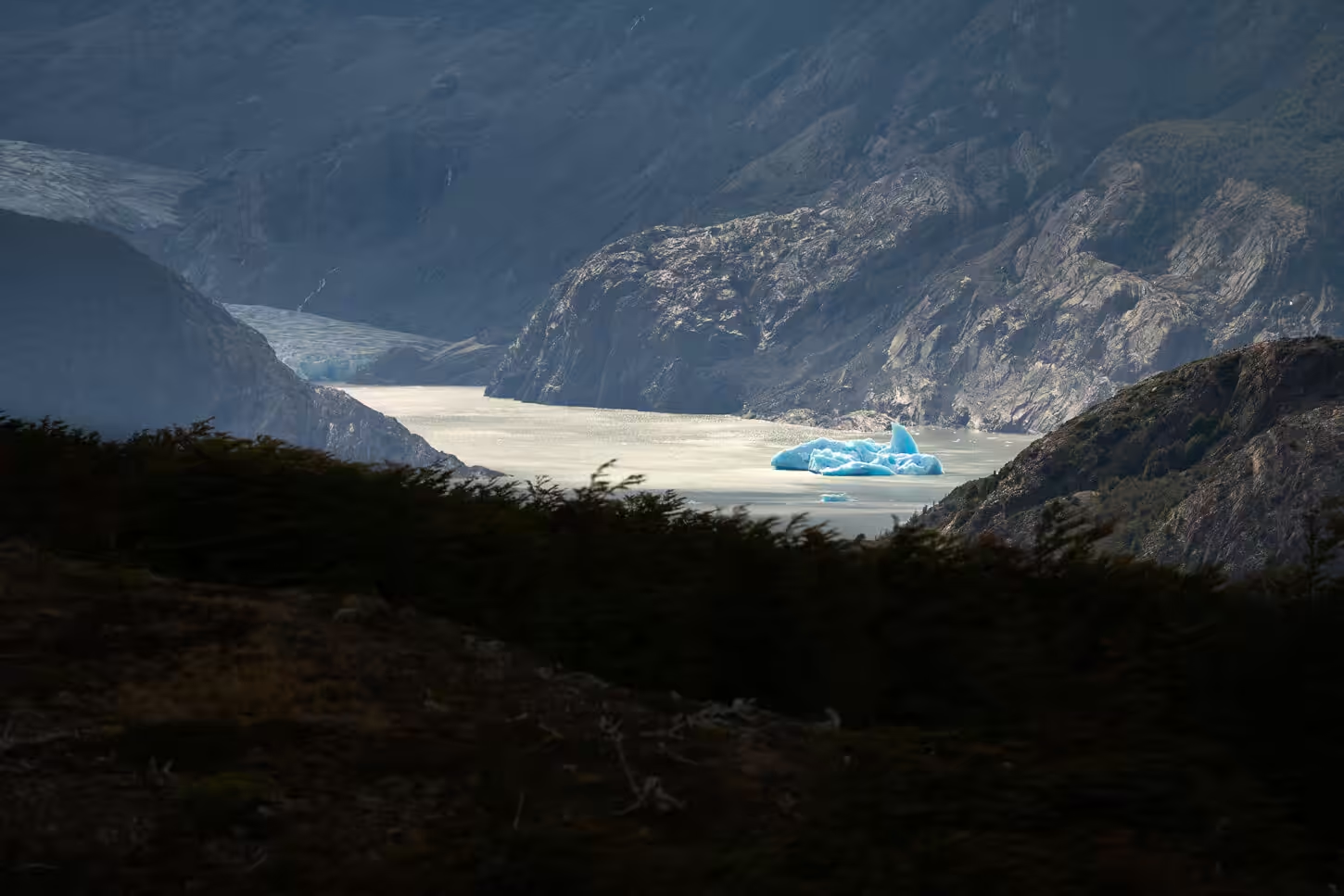
Iceberg floating on Lago Grey
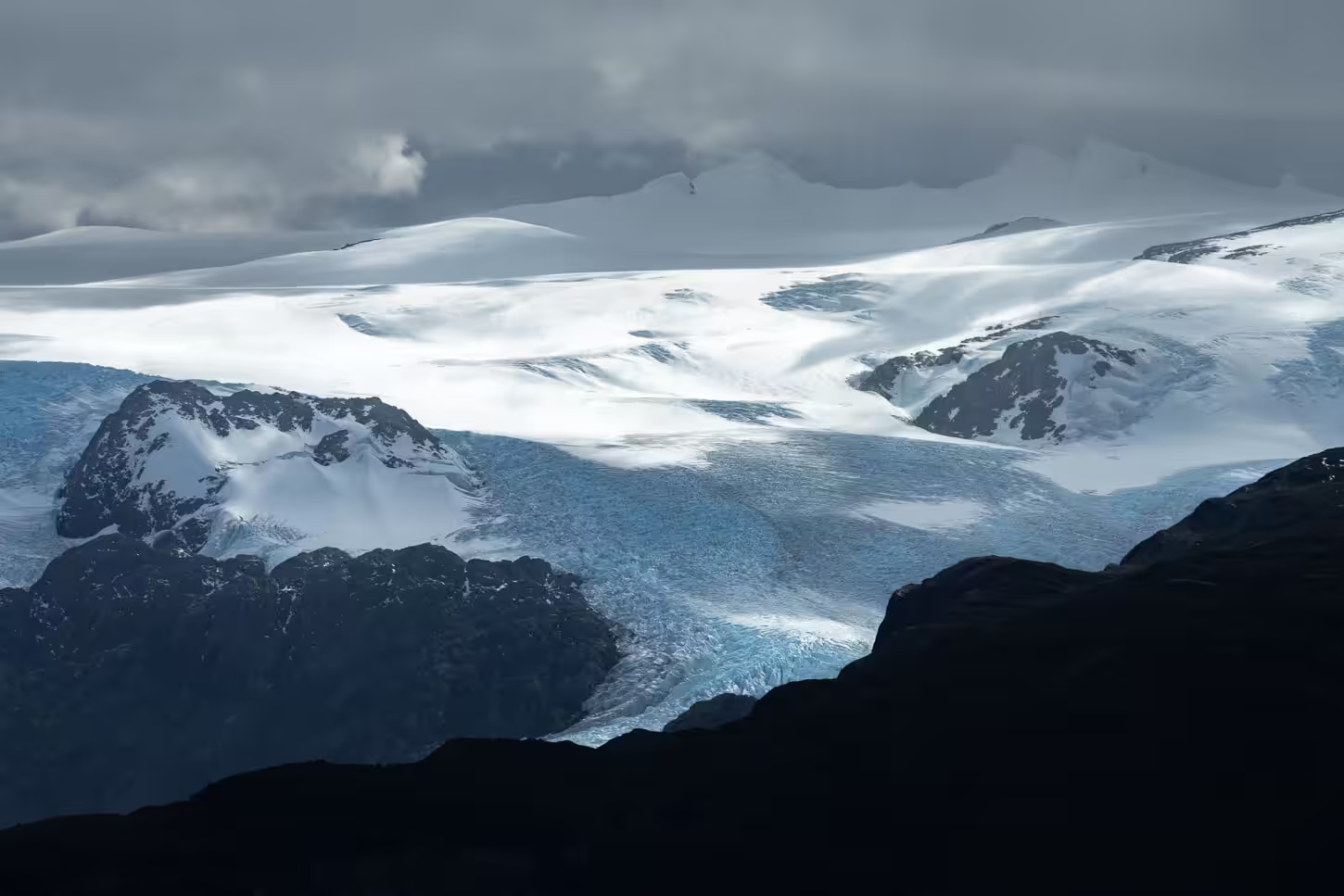
I stayed up there a good half an hour to soak in the views and all the little details in the vast landscape around the Mirador. Particularly interesting were the Icebergs flating in Lago Grey, and the details of the Icefields further north,
That until the Patagonian winds became too strong to stay around. I had to literally struggle to stay on my feet. So I started descending, completely unaware of what kind of event I was going to run into.
Meeting with a Puma – and about Wildlife around the Mirador Ferrier Trail.
The Puma, or cougar, or Cougar, or Mountain Lion, is one of the wild animals that populate Torres del Paine. An elusive predator, at the top of the food chain in this environment.
I looked for stats after my encounter, but attacks on humans in the park are mentioned as very rare. How rare in reality, we do not know. But indeed, due to the lack of reports, it appears they are very rare. Pumas also do not generally like to be seen, and they have plenty of “food” they can prey on.
Being animals that do not like to be seen, like most predators, they tend to avoid human contact, too.
A Puma walking the Trail
So I was rather surprised when, while hiking back down, I turned a corner, and there it was. A large Puma, no more than three meters (ca. 10 feet) away. That’s awfully close. Alone. In the woods.
Thankfully, the Puma was on its way out even before my mind registered what that thing in front of me was. I watched it disappearing nimbly and silently into the bushes, squatted down, as if it was ashamed to have been spotted. Phew.
I slowly kept walking down the trail once the Puma disappeared. At the same time, I kept a side-eye on the bushes to monitor for any possible movement. Not that it would have mattered much if the Puma was stalking me, but you know – survival instinct, I guess.
Then, a sense of awe for having seen such a beautiful animal made its way through my mind. And a beautiful animal indeed. And no, I did not even think about pulling up the camera to try to take a photo of the Puma. That would have probably been one of the worst possible moves.
Once back at the ranger’s station, I reported both encounters to the Ranger on duty, in my broken Spanish. The ranger appeared to be quite excited at the news of the Huemul sighting. Not that much surprised about the Puma sightings, as if it were more akin to crossing paths with a stray dog in Puerto Natales.
Still, one question puzzled me. How did the Puma and I manage to get that close, with the Puma being such an elusive animal?
Wildlife insights around Mirador Ferrier
I could only come up with one possible answer. Do you remember the Huemul I saw on the way up? Well, I might have found myself in the middle of a chase. The Huemul was probably still in the area. It was about an hour since I saw it, which was a little further uphill from where I met the Puma. So the only thing I could think of is that the Puma was so much into the “zone”, tracking the scent of the Huemul, that it might have missed the human approaching.
I later talked to a guide about the encounters; that guide had seen a Huemul only three times in the park, so I can consider myself rather lucky. And confirmed Puma sightings, although they do not happen that often, they are more common. The guide also mentioned most of the Huemul encounters in TDP have been reported from the Ferrier area.
The thing is, the Mirador Ferrier trail borders the Pingo Valley, which is the area in the Torres del Paine with the highest concentration of Huemul, and an area you can only access with a guide. The area is also not as crowded as other areas around the main Trekking trails. So I guess it’s not unlikely that from time to time the Huemul population roams around the Ferrier area too. And, consequently, Pumas, as predators, may be in the area too.
Mirador Ferrier Photos and Photography Tips
Purely for photography reasons, the hike to Mirador Ferrier was high on my list because of the wide view it offers. And being someone who loves using telephoto lenses for landscape, I was looking forward to using my Nikkor Z 100-400 more than any other lenses.
Wider landscape shots are relatively limited after all, with everything being relatively distant from the Mirador. In that sense, a 24mm on the wider side proved to be more than enough to capture the landscape as a whole.
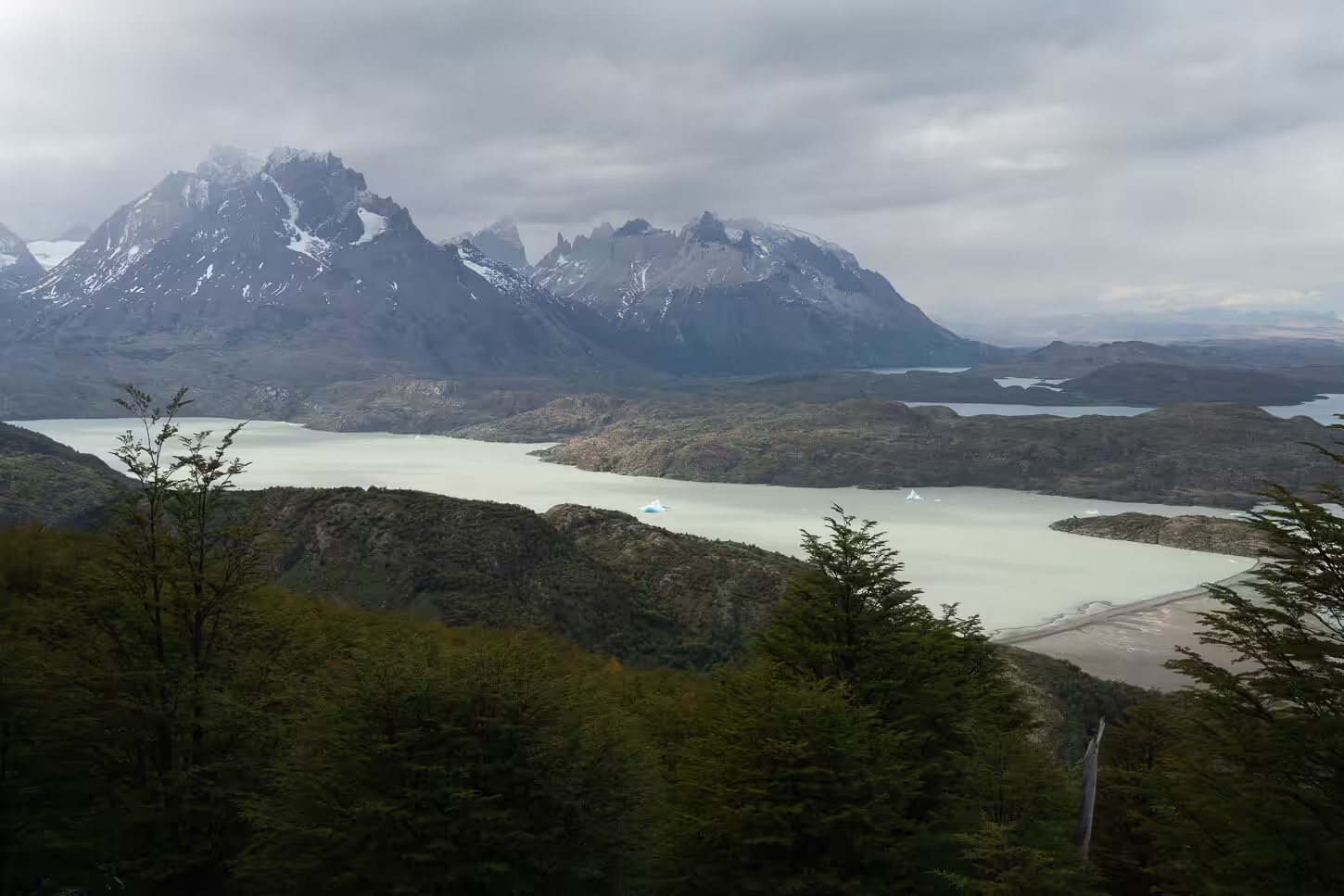
Lago Grey – 24mm photo.
24mm
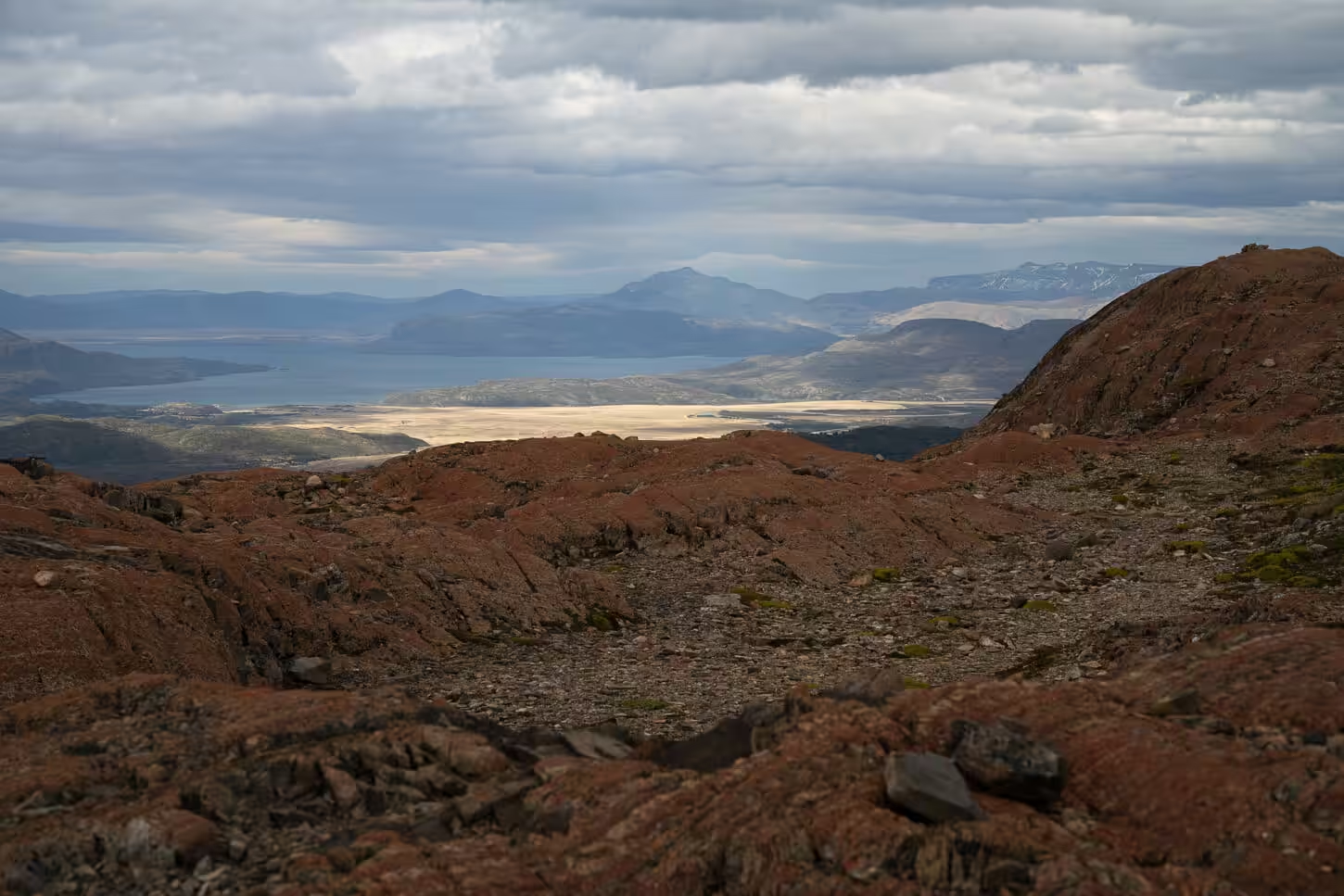
24mm.
So I’d recommend bringing the longest lens you have. I used my 100-400 the most, and time flew while I was looking through the viewfinder, not only to find composition , ut to just cool ar the more remote corners of the park.
With such wide, open views of the park, there are plenty of details you can isolate in the landscape. Each landscape feature becomes a subject of its own, from the peaks to the glacier and the lakes around the lookout.
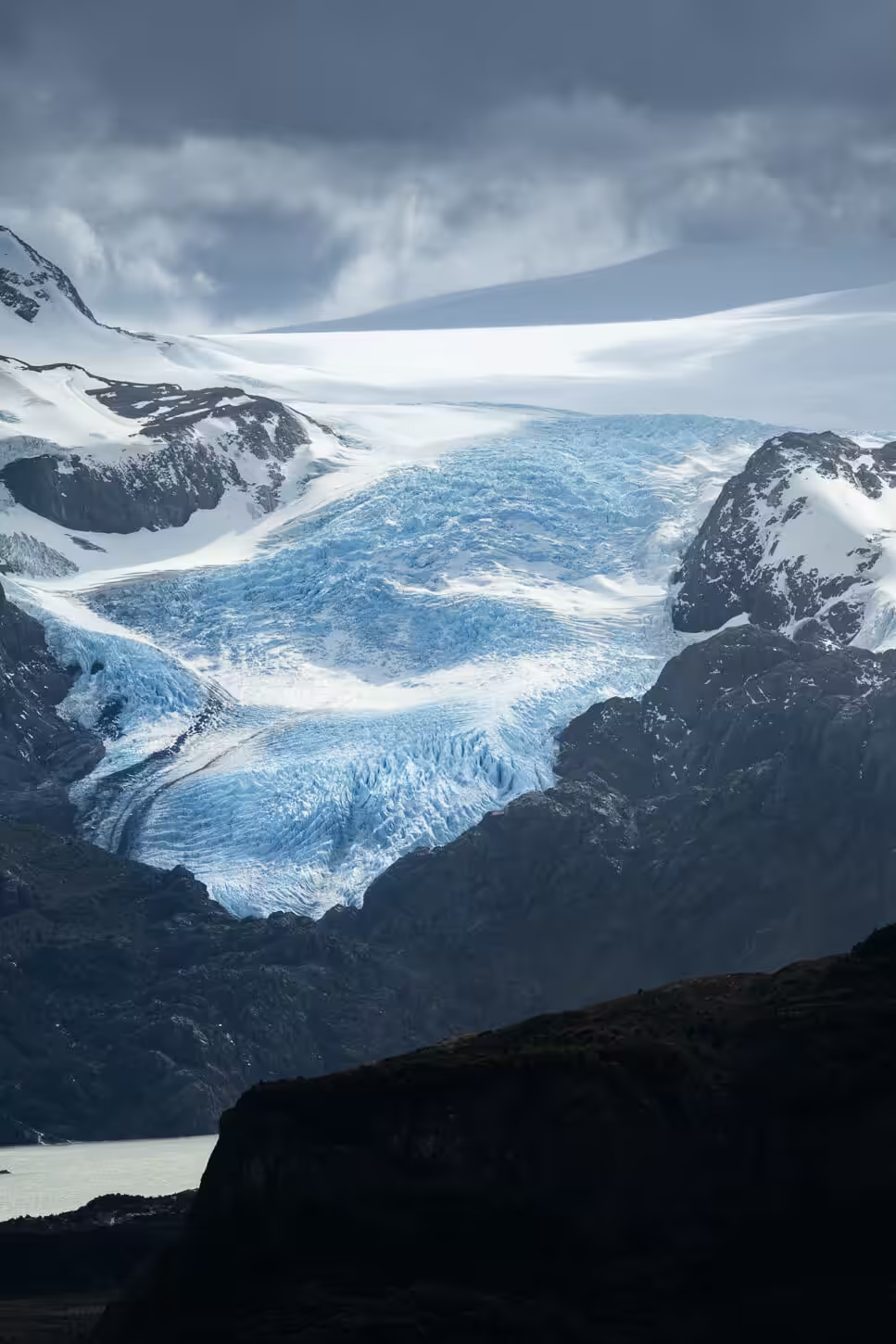
Pingo Glacier, 400mm
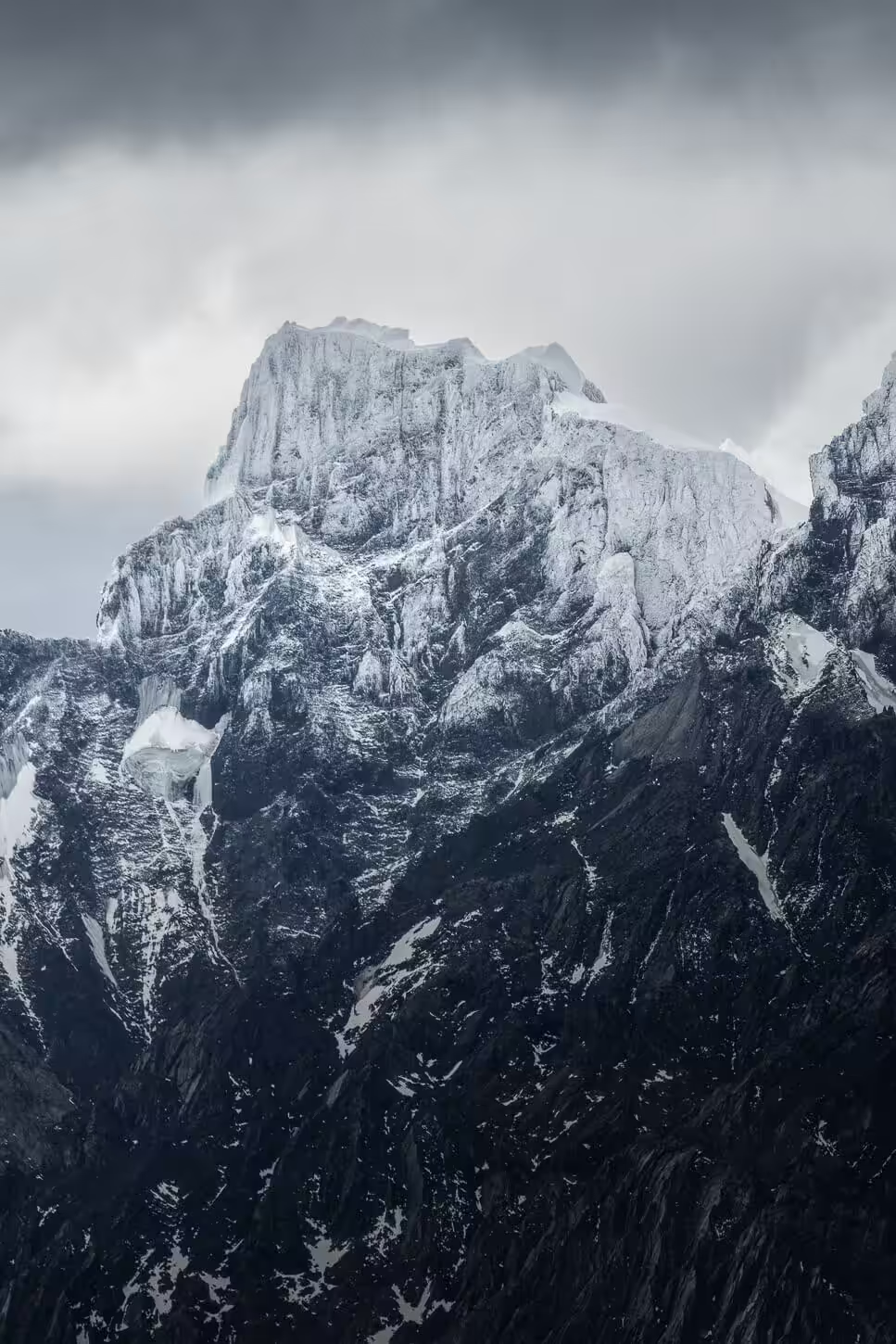
Snowy Peak in the Paine Grande Massif. 400mm
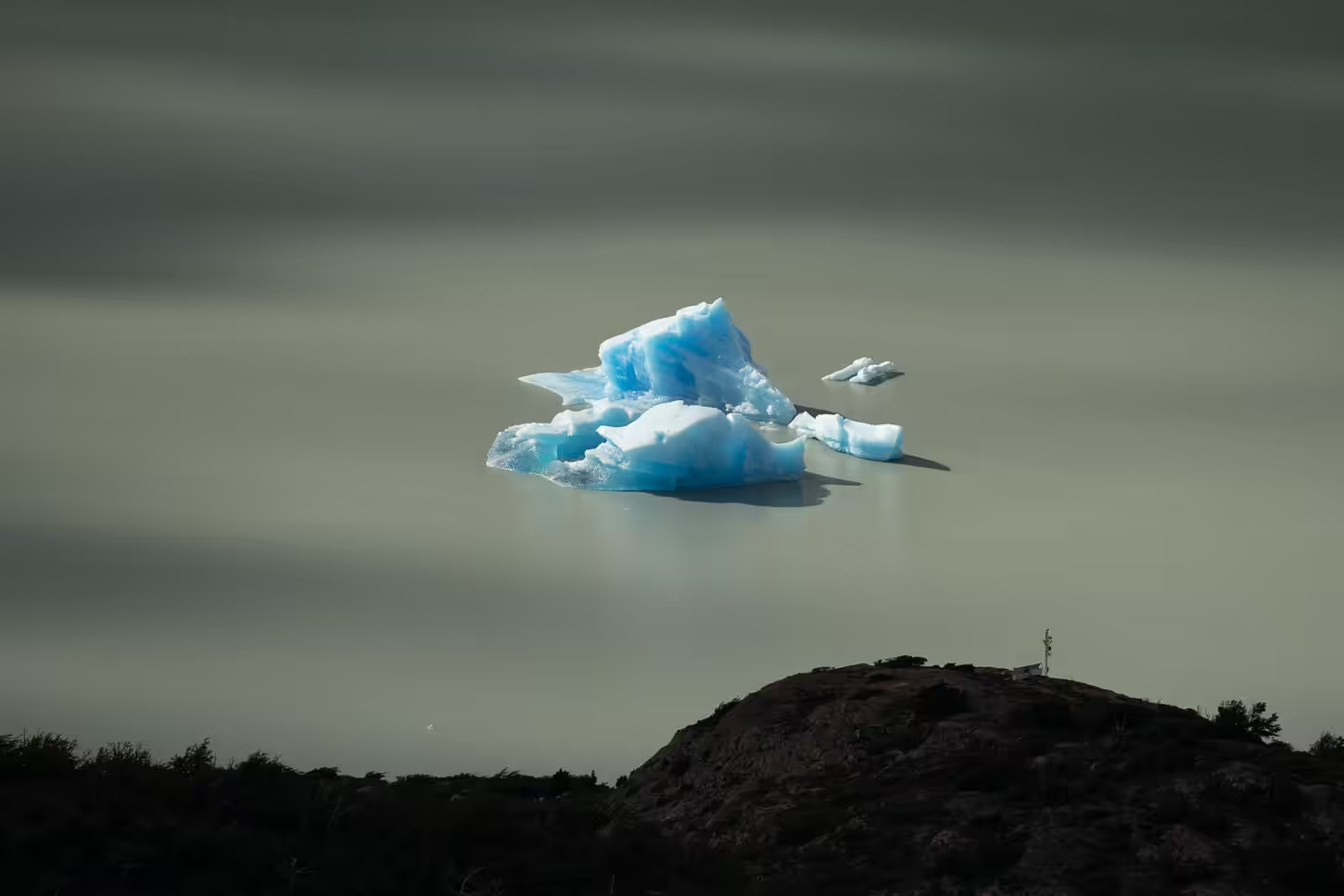
Iceberg floating in Lago Grey, 300mm
Where to Stay
Hotel Lago Grey is the closest possible accommodation, but it’s a bit on the pricier side. And I think it makes sense to stay there if you are planning to take the boat to the Mirador Glacier Grey the day after, or do some other activities in the area.
Otherwise, the area around Río Serrano, further south, is not too far and is the most affordable within the Park. Accommodation within the Park is limited and can vary from ok to outrageously pricey.
To stay within the park, Osteria Pehoé is arguably one of the most scenic places – and where I stayed too for three nights. It has reasonable prices provided you book enough in advance and don’t choose one of their superior rooms.
Another close-by alternative for a more open-air experience is either Camping Pehoé or the Yellow Plum Pehoé campsite – where I spent a couple of nights too, and can absolutely recommend.
Additional Resources
- Here is also my Torres del Paine Hiking and Photography guide, a useful read if you are planning a trip to TDP.
- For more hikes and photo locations in Chile, check out the main Hiking in Chile page.
- Here is the official Torres del Paine Website.
- If you have time, it’s worth visiting the nearby Mirador de los Hielos on Lago Grey to see some icebergs up close!

Leave A Comment